

When Everything Breaks Down — Emergency Communication Networks and Why They Matter
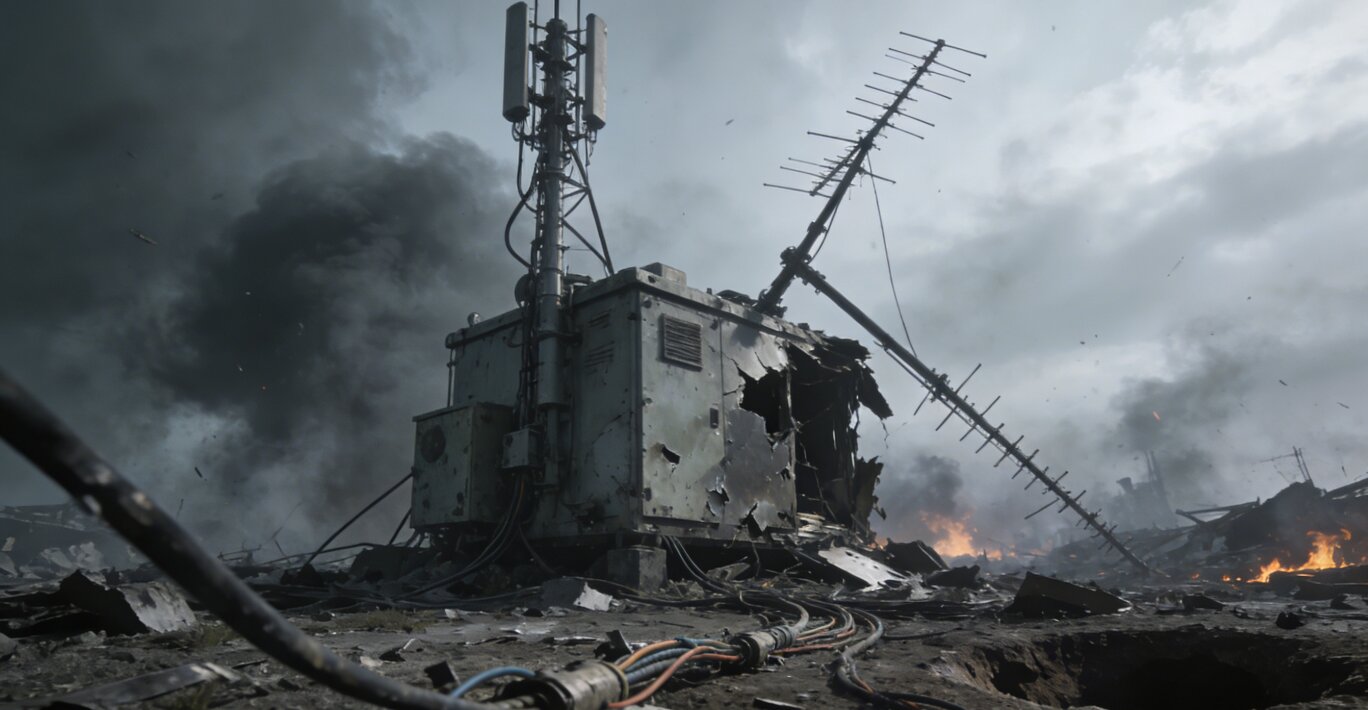
Imagine a Category 5 hurricane has just made landfall. Power lines are down. Cell towers are toppled. Internet cables are snapped. The very moment communities need to call for help, coordinate rescues, and reach loved ones, silence. This is not a hypothetical. It is a reality that has unfolded in hurricanes, earthquakes, floods, and armed conflicts around the world.
Emergency Communication Networks exist precisely to solve this problem. They are the invisible backbone of disaster response, the systems that keep information flowing when conventional infrastructure fails. In this article, we break down exactly how these networks work, why they're so critical, and what technologies power them.
Part 1: Introduction to Emergency Communication
What Is Emergency Communication
Emergency communication refers to the methods, systems, and protocols that ensure continuous, reliable information exchange during a crisis. Unlike everyday communication which relies on a complex web of commercial infrastructure emergency communication is purpose-built for resilience. It is designed to work precisely when everything else has failed.
At its core, emergency communication serves three fundamental purposes:
- Public Safety - Enabling individuals to reach emergency services and receive life-saving guidance.
- Relief Coordination - Allowing relief agencies, government bodies, and first responders to synchronize their efforts efficiently.
- Community Awareness - Providing affected populations with timely, accurate information about risks, evacuations, and available resources.
Why It Matters in Disasters
Effective emergency communication is one of the most powerful predictors of how well a community weathers a disaster. Studies and post-disaster analyses consistently show that rapid, organized communication enables faster response, reduces casualties, and accelerates recovery. Without it, even the best-prepared relief teams are working blind.
Traditional vs. Alternative Communication Methods
Traditional communication tools:
Landlines and Mobile Phones are deeply vulnerable in crisis situations. They depend on physical infrastructure: towers, cables, power grids. When these are compromised, communication collapses.
Alternative methods, such as Epack and Mesh radio systems, offer a fundamentally different approach. They are engineered to operate independently of commercial infrastructure providing reliable connectivity even when every conventional network has gone dark.
Part 2: Challenges in Regular Communication Networks
To understand why dedicated emergency networks are necessary, we must first understand how fragile conventional networks are when confronted with large-scale disasters.
1. Damage to Base Stations
Mobile communication networks depend on base stations physical towers and relay points that carry signals. These stations are highly vulnerable to the forces that disasters unleash:
- Natural disasters ~ earthquakes, floods, hurricanes, and wildfires can physically destroy towers, sever fiber connections, and eliminate power supplies.
- Armed conflicts and bombings deliberately or incidentally target communication infrastructure, rendering entire regions silent.
- Once destroyed, repairing base stations is a slow, resource-intensive process leaving communities without reliable communication for days, weeks, or even months.
2. Disruption of Services
Even when base stations are not completely destroyed, disasters can cause widespread service disruption through network congestion, power outages, and physical damage to access points. The cascading effects include:
- Mobile networks, internet services, and landlines all simultaneously going offline.
- Inability of disaster-affected individuals to reach family members, friends, or emergency services.
- Critical delays in emergency response when coordination channels fail.
3. Long Repair Times
Restoring damaged communication infrastructure is far from upfront. It requires specialized equipment, expert technicians, and stable access conditions, all of which are in short supply immediately after a disaster. In conflict zones, active hostilities can make repairs impossible for extended periods.
This creates a brutal paradox: communities need communication most urgently right after disaster strikes, but this is precisely when commercial networks are most likely to be down and take the longest to restore.
Part 3: The Need for Emergency Communication Networks

Rapid Response: Speed Is Everything
In disaster management, every minute counts. The window between a disaster event and effective response is often the difference between life and death. Emergency communication networks are specifically engineered to be deployed rapidly, providing immediate connectivity exactly when it is most needed.
Key rapid-response capabilities include:
- Real-time communication channels that allow authorities to reach affected areas instantly.
- Quick deployment protocols that can establish connectivity within hours of a disaster.
- Support for rescue coordination that reduces disaster impact through faster, better-informed decision-making.
Temporary Network Setup
One of the most powerful features of emergency communication networks is their ability to establish temporary connectivity in areas where no network infrastructure currently exists. Using Epack and mesh network technologies, communication can be restored rapidly:
- Portable Epack devices can be transported into disaster zones and activated quickly.
- Mesh networks can be created by linking multiple nodes together without any central infrastructure.
- These temporary setups restore communication to areas completely cut off from the outside world.
Ensuring Communication Continuity
Beyond immediate response, emergency networks ensure that communication continuity is maintained throughout the full duration of a crisis, from the initial event, through the relief phase, and into early recovery.
This continuity serves three critical roles:
- Establish Emergency Networks ~ Creating reliable channels that operate independently of damaged infrastructure.
- Maintain Public Safety ~ Providing the continuous flow of information that protects lives during the crisis period.
- Enable Community Action ~ Giving affected populations the tools they need to get informed, seek help, and coordinate local relief efforts.
Part 4: How Emergency Communication Networks Work
Epack/Mesh Communication: The Technological Core
At the heart of modern emergency communication is a category of technology known as Epack/Mesh systems. These are not traditional radio networks or scaled-down versions of commercial infrastructure. They are fundamentally different in their design philosophy.
Epack/Mesh systems have three defining characteristics:
- Broad Coverage: Epack/Mesh networks can cover large geographic areas, including remote and disaster-hit regions that standard networks were never designed to reach.
- Multi-Modal Transmission: They support voice calls, data transfer, and video streaming providing a full communication suite, not just basic radio links.
- Crisis-Grade Reliability: Designed specifically for emergency use, these systems offer dependable connectivity in the most challenging environments.
Wireless Epack/Mesh Networks: Architecture and Design
What makes wireless Epack/Mesh networks particularly powerful is their architectural design. They embody three principles that make them uniquely suited for emergency use:
- Self-Organising and Quick Deployment ~ Unlike traditional networks that require manual configuration and infrastructure setup, Epack/Mesh networks self-organise. Deploy the nodes, and the network forms itself automatically. This radically reduces setup time during emergencies when time is the scarcest resource.
- Decentralized Network with Redundancy ~ Multiple interconnected nodes mean there is no single point of failure. If one node is damaged or destroyed, traffic automatically reroutes through remaining nodes. The network heals itself, maintaining connectivity even as damage accumulates.
- Support for Diverse Devices and Applications ~ Emergency communication must serve many different users: first responders with ruggedized radios, relief coordinators with laptops, and civilians with smartphones. Wireless Epack / Mesh networks are designed to support all of these device types and the applications they run.
The Bigger Picture: Communication as a Lifeline
Emergency Communication Networks are not a luxury or a technical afterthought. They are a foundational element of any society's resilience infrastructure. The difference between a community that survives a crisis and one that is overwhelmed by it often comes down to one question: can people communicate?
As climate change increases the frequency and severity of natural disasters, and as geopolitical instability creates new conflict zones, the need for robust emergency communication infrastructure is only growing. Investing in and understanding these systems is not just a technical responsibility, it is a humanitarian one.
The technologies explored in this article, Epack systems, Mesh networks, decentralized communication architectures, represent the cutting edge of emergency preparedness. They are the tools that keep people connected when it matters most.
When the world goes dark, emergency communication networks are what keep the light of coordination, hope, and human connection alive.
💬 Let's Start a Conversation
Have you ever been in a situation where regular communication failed during a crisis? Or are you working on emergency preparedness systems? I'd love to hear your experiences and perspectives in the comments below.
If this article was valuable to you, please share it with your network — emergency preparedness affects all of us, and awareness is the first step toward resilience.
17 March 2026